Great Perfect Penetration through Mindfulness
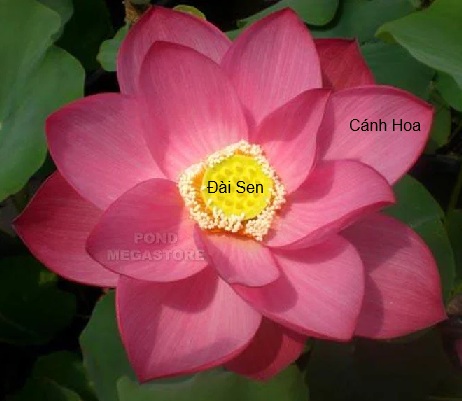 The Great Perfect Penetration through Mindfulness of the Buddha is a method of cultivation involving Buddha-recitation in the Pure Land school. This method was taught by Bodhisattva Mahāsthāmaprāpta in the fifth fascicle of the Śūraṅgama Sūtra. One cultivates by gathering in all six sense faculties without selecting among them, maintaining pure mindfulness continuously. This method is used to collect and restrain the six faculties and the delusive thoughts that arise. One disciplines the six faculties so they no longer generate false thinking. One recites the Buddha’s name with a pure mind, uninterruptedly, until attaining right concentration.
The purpose of Buddha-recitation is to gather scattered thoughts into single-minded remembrance of the Buddha. If you do not become entangled with false thoughts, then false thoughts will not arise. When you do not create evil deeds, it means you are already on the path of doing good.
Quoting the 48 vows in the Infinite Life Sūtra: Whoever is born in the Western Land of Ultimate Bliss, regardless of whether their grade is high or low, even those reborn in the Borderland, are all born by transformation within lotus flowers. A lotus consists of three parts: petals, the lotus receptacle, and lotus seeds. Every grade of rebirth has a lotus flower, and every lotus flower has a receptacle. As soon as beings in the ten directions give rise to the aspiration for Anuttara-samyak-saṃbodhi and seek rebirth in the Western World, a lotus immediately blossoms in Amitābha Buddha’s seven-jeweled pond. Upon that lotus is written one’s own name.
The Western World is a world of equality; only the lotuses are unequal. The equality of that world comes from enjoying the blessings of Amitābha Buddha. Amitābha grants us equality, but the lotus flower and lotus pedestal are manifestations of our own Pure Karma and therefore differ from one another. The lotus pedestal differs according to each grade of rebirth, while a vajra pedestal is the most supreme for those reborn in the highest grades.
The deeper your Buddha-recitation practice, the larger your lotus becomes. In the seven-jeweled pond there are lotuses one yojana wide, ten yojanas wide, a hundred yojanas wide, and a thousand yojanas wide. Thus their sizes differ, as do their radiance and colors. If we want a magnificent and supremely splendid lotus, if we want a golden pedestal or vajra pedestal, we must genuinely cultivate. It is not something Amitābha Buddha gives to us; rather, it naturally manifests from our own pure karma. Amitābha helps us by bringing that lotus to receive and guide us when we are near death. The lotus is not planted by Amitābha Buddha but manifested from our own pure karma. Shallow practice corresponds to rebirth in the lower grades, since most of us have not eliminated afflictions but merely suppressed and controlled them. That is the most superficial level of practice. Deep practice, in which several grades of ignorance are broken through and one attains the Principle One-Mind Undisturbed, leads to rebirth in the middle or upper grades.
We ourselves may aspire to be reborn in the highest grades, but do we possess such ability? If not, it can be cultivated. How? By eliminating afflictions. When afflictions are completely eliminated, wisdom naturally unfolds. If you have such aspiration, you will attain it. One must certainly eliminate afflictions and develop wisdom. In other words, the mind-ground must become pure. A pure mind perceives external circumstances through illuminating insight. The six faculties naturally become keen; hearing or seeing something immediately brings awakening and understanding. At that point, making vows to propagate the Dharma and benefit sentient beings is not difficult. Therefore, the foundational work is the elimination of afflictions, which also means cultivating concentration. First stabilize the mind. From precepts comes concentration; from concentration comes wisdom. Thus, precepts are the root of unsurpassed Bodhi. Precepts mean following rules. If you do not follow rules, you cannot attain concentration.
After several years of Buddha-recitation, afflictions become lighter and the mind becomes pure. You attain concentration and the Buddha-Recitation Samādhi, also called One-Mind Undisturbed. Once One-Mind is attained, if you have the ability, interest, and aspiration, you may study the teachings in order to propagate the Dharma and benefit beings. Following this path is correct; the sequence is not mistaken and can lead to success. “Within the Buddha’s gate, every sincere request receives a response.”
— oOo —
Thusness, Thusness
There are two kinds of lotus pedestals. One is the pedestal beneath the lotus flower. In temples, whether the Buddha image is sculpted or painted, there is usually a pedestal beneath it, with the lotus on top. The second kind is the pedestal inside the lotus bud itself, commonly called the lotus receptacle or seedpod. This is the lotus pedestal within the flower. Where does the Buddha sit? The Buddha sits upon the lotus receptacle. “Like lotus seeds surrounding the receptacle.” The lotus seeds encircle the receptacle. The receptacle grows within the flower. Whether a Buddha image is seated or standing, the feet stand upon the receptacle, and a seated Buddha also sits upon it. Thus there are these two different meanings of “pedestal.”
As for lotus seeds, “lotus seeds” refer to the receptacle itself. The seeds surround the receptacle, which is the pedestal in the sense of the lotus chamber. “The lotus represents the Ten Suchnesses.” In the Tiantai tradition, the Ten Suchnesses are also the essential meaning of the Lotus Sūtra. The Ten Suchnesses are: Suchness of Appearance, Suchness of Nature, Suchness of Substance, Suchness of Power, Suchness of Function, Suchness of Cause, Suchness of Condition, Suchness of Effect, Suchness of Retribution, and Suchness of Ultimate Consistency from Beginning to End.
“Suchness” is also rendered as “Thusness.” Buddhist scriptures begin with “Thus have I heard.” What is “thus”? It is precisely these things. “Thusness” is a term indicating Dharma, meaning that all phenomena have such appearance, such nature, and so on through ultimate consistency; none are apart from the True Reality.
What is “Suchness of Appearance”? Appearance means phenomena and form. Forms can be seen with our eyes and touched with our hands. They possess color, shape, and characteristics. Animals, plants, and minerals each have their own forms and appearances. Phenomena have appearances but may lack substantial form, such as clouds in the sky or the moon reflected in water. They have appearance but no tangible substance. You can see them but cannot grasp them. The term Appearance includes all forms and phenomena. Why is it called Thusness? There is profound meaning here. Where do appearances come from? Appearance involves both what is manifested and that which manifests. Without that which manifests, how could there be manifested appearances? The manifesting principle is Nature, the Essence. What is Nature-Essence? It is our true mind, also called True Suchness. Are the appearances manifested by the true mind real? Of course they are real. If one thing is real, then all things are real.
“Suchness of Nature” and “Suchness of Substance.” Nature refers to intrinsic nature. Substance refers to fundamental essence. Outside the framework of the Ten Suchnesses, Nature and Substance are often combined. Substance is Nature, and Nature is Substance. Usually they are spoken of together as Nature-Essence or Essence-Nature. Here, however, they are distinguished. Ultimately they still refer to the same reality, though from different perspectives. Nature is the origin of all phenomena, the true mind, the original nature. Substance is what has become transformed; Nature transforms into Substance.
Substance has two kinds: a spiritual essence and a material essence. Substance refers to the Perceiving Aspect and the Object Aspect of the Ālaya Consciousness. The Perceiving Aspect of Ālaya is the spiritual essence, commonly called the soul. When people die and are reborn, what is reborn? The soul, not the physical body. The physical body is material. The Perceiving Aspect is the basis of consciousness. In Buddhism, it is not called a soul but consciousness.
All material forms are “a single composite appearance.” Modern science has confirmed this. The Diamond Sūtra says that this world is a single composite appearance. “Single” refers to one fundamental kind of matter; “composite” means combined together. Scientists today understand that basic matter is indeed one thing, differing only in structural formulas and arrangements. Thus it combines into electrons, atoms, molecules, and then into animals, plants, and minerals. Analyzing them reveals that they are indeed a single composite appearance. This “single” is the substance of matter and corresponds to the Object Aspect discussed in the Consciousness-Only school.
“Suchness of Power.” Power means energy. Today we might call it force or motion. What drives it? You must understand that the true mind is pure. The true mind and original nature are tranquil, quiescent, and unmoving. In the universe, from vast galaxies down to tiny particles, everything moves. Even under powerful microscopes, minute particles appear like tiny worlds with electrons orbiting them, resembling miniature universes. What force drives them? Modern scientists think positive and negative electrical charges do. But where do those come from?
Buddhism explains this very thoroughly. The Buddha taught: “From ignorance and non-awakening arise the three subtle appearances.” How does motion arise? From ignorance. Enlightenment is stillness; ignorance is movement. Ignorance exists prior to the three subtle appearances. Once the mind moves, ignorance arises. Movement gives rise to the three subtle aspects of Ālaya Consciousness: the Appearance of Ignorant Activity, the Perceiving Appearance, and the Appearance of the Object World. The Perceiving Appearance is the Perceiving Aspect, while the Object Appearance is the Object Aspect. Once movement occurs, True Nature becomes Ālaya. Therefore Ālaya is Substance. The Nature mentioned previously is True Suchness. Because of a single thought of non-awakening, True Suchness transforms into Ālaya. Within Ālaya there is power—the power of ignorance—which drives all activity.
“Suchness of Function.” Function means activity and creation. Wherever there is activity, karma is produced. Whether large or small, every phenomenon completely possesses these ten aspects without lacking a single one.
“Suchness of Cause.” Cause refers to the seeds stored in the Ālaya Consciousness, accumulated over countless lifetimes. We possess the causes for all ten Dharma realms. We have the cause to become Buddhas, the cause to become Bodhisattvas, and even the cause to fall into the Avīci Hell. Nothing is lacking. The key to what result we experience is Condition. Therefore Buddhism places great importance on conditions. Why does Buddhism speak of dependent origination rather than simply causation? Because conditions can be controlled, whereas causes cannot. Causes already exist and cannot be changed.
“Suchness of Condition.” Conditions can be controlled. For example, if we created evil causes in the past, those causes already exist. But if from now on we sever all evil conditions, those causes cannot ripen into results. We cut off the conditions. If we have good causes from the past and now add good conditions, the resulting fruit will be favorable. The scriptures often teach: “The Pure Land is only mind; Amitābha is one’s own nature.” These statements point to causes. The Western Pure Land and Amitābha Buddha arise from our own causes. Since we already possess those causes, we need only add the proper conditions. We go to the Western World to become Buddhas. Therefore the Amitābha Sūtra teaches: “One cannot be born there through a small amount of good roots, merit, causes, and conditions.” Self-Nature Amitābha and Mind-Only Pure Land are the causes; wholehearted faith, vows, and recitation of Amitābha’s name are the conditions. When cause and condition unite, the resulting fruit is rebirth in the Western World and meeting Amitābha Buddha.
If we forget this, we have many other causes: greed for wealth, fame, sensual pleasures, and the five desires and six sense objects. Within Ālaya are the seeds of the three evil paths—hell beings, hungry ghosts, and animals. What are the conditions for those realms? Greed, anger, and ignorance. If we continually nourish greed, anger, and ignorance, the resulting fruits will be the three evil destinies. Greed leads to the hungry ghost realm. Anger leads to the hell realm. Ignorance leads to the animal realm. Ignorance means confusion regarding truth and falsehood, right and wrong, good and evil.
The Śūraṅgama Sūtra says very well that in the Dharma-Ending Age, “false teachers expounding the Dharma are as numerous as the sands of the Ganges.” Can you distinguish right from wrong teachings? If not, then even practicing Buddhism may eventually lead to rebirth in the animal realm. One may practice with a good heart yet enjoy blessings as an animal. Nowadays many people keep pets, and some pets enjoy tremendous blessings. Abroad one often sees households revolving entirely around a pet. Everyone serves the pet. The pet does not serve its owners; rather, the owners serve and care for it devotedly. This is upside down.
The Buddha described this as delusion and inversion. Such indulgence of pets is becoming increasingly common. Some care for pets more attentively than they care for their own parents. This results from good intentions mixed with ignorance and leads to corresponding karmic consequences. Therefore one must clearly distinguish truth from falsehood, right from wrong, and good from evil. Only then can one transcend the three realms and avoid wasting this life. We must control conditions. Conditions are truly within our own power. Stay away from evil conditions and draw near to good ones. Among all conditions, the supremely perfect condition is Amitābha Buddha. Few truly understand this. If you genuinely understand it, you will let go not only of worldly matters but even of all other Buddhist teachings, devoting yourself single-mindedly to the recitation of Amitābha Buddha’s name.
“Suchness of Effect” and “Suchness of Retribution.” These are sometimes combined but can also be distinguished. If in a previous life we cultivated good karma and are born human in this life, that is the Effect. The experiences and enjoyments of this human life constitute the Retribution. Some people live happily, while others suffer greatly. The effect is the same—human birth—but the retribution differs. The Consciousness-Only school calls these Leading Karma and Fulfilling Karma. Leading Karma directs one toward a particular rebirth; that is the Effect. Fulfilling Karma determines the circumstances experienced after rebirth; that is the Retribution.
If we truly understand this reality, then not only can we be masters of this life, but we can also direct our own destinies lifetime after lifetime. When one becomes one’s own master, one is no longer called an ordinary sentient being but a Buddha or Bodhisattva. The Śūraṅgama Sūtra states: “If one can transform circumstances, one is like the Tathāgata.” Who can transform circumstances? One who understands clearly. Transforming circumstances is not difficult. The difficulty lies in understanding and awakening. Once awakened, the practice becomes easy. Why? Because one clearly understands causes, conditions, and results. Given certain causes and conditions, corresponding results follow. You can create and control causes and conditions, and the resulting fruits will accord with your aspirations.
“Suchness of Ultimate Consistency from Beginning to End.” This statement summarizes the previous nine. There is root and branch, beginning and end, all ultimately consistent. Every phenomenon falls within the Ten Suchnesses. When the Tiantai Patriarch explained the title of the Lotus Sūtra, he used the lotus flower to explain the Ten Suchnesses. In other words, the lotus serves as a symbol through which the Ten Suchnesses are revealed. Thereafter one understands that every phenomenon possesses the Ten Suchnesses without exception.
— oOo —
The Final Mind Is the Great Mind
At the moment of death, ten recitations occupy only an instant. The time is extremely short. Why can one still attain rebirth? The answer is single-mindedness. As stated in the Mahāprajñāpāramitā Śāstra, this is due to both self-power and other-power. Though the time is short, the practitioner’s concentration is exceptionally strong and sharp. In other words, it can surpass the power of a lifetime of Buddha-recitation. In that brief moment, the dying person’s effort may exceed that of someone who has recited for an entire lifetime.
At death, all conditions are let go. One realizes that nothing can be taken along. Suddenly awakening, one releases everything and recites the Buddha’s name with complete concentration. That power becomes extremely vigorous. Therefore such a person can attain rebirth and even achieve a very high grade of rebirth. This is the principle involved. Thus the final mind is called the “Great Mind.”
When a person is dying, only a few hours or even minutes remain. There is no time left. With single-minded Buddha-recitation and no stray thoughts, this is the final mind. It is called the Great Mind because the dying person knows with certainty that death cannot be avoided. This resolute determination surpasses aspirations cultivated over a hundred years.
One who gives rise to this Great Mind truly awakens. Bodhi means genuine and thorough awakening. One realizes that apart from Amitābha Buddha, there is no one who can save them. Therefore one firmly grasps Amitābha Buddha’s name without wasting a single moment. That is the Great Mind. Once this mind is present, there are no other thoughts. One quickly enters the Samādhi of No-Mind and swiftly departs from all thought-forms. Is this not great? Is this not precisely the Bodhi Mind?
The Mind of Anuttara Samyak Saṃbodhi.